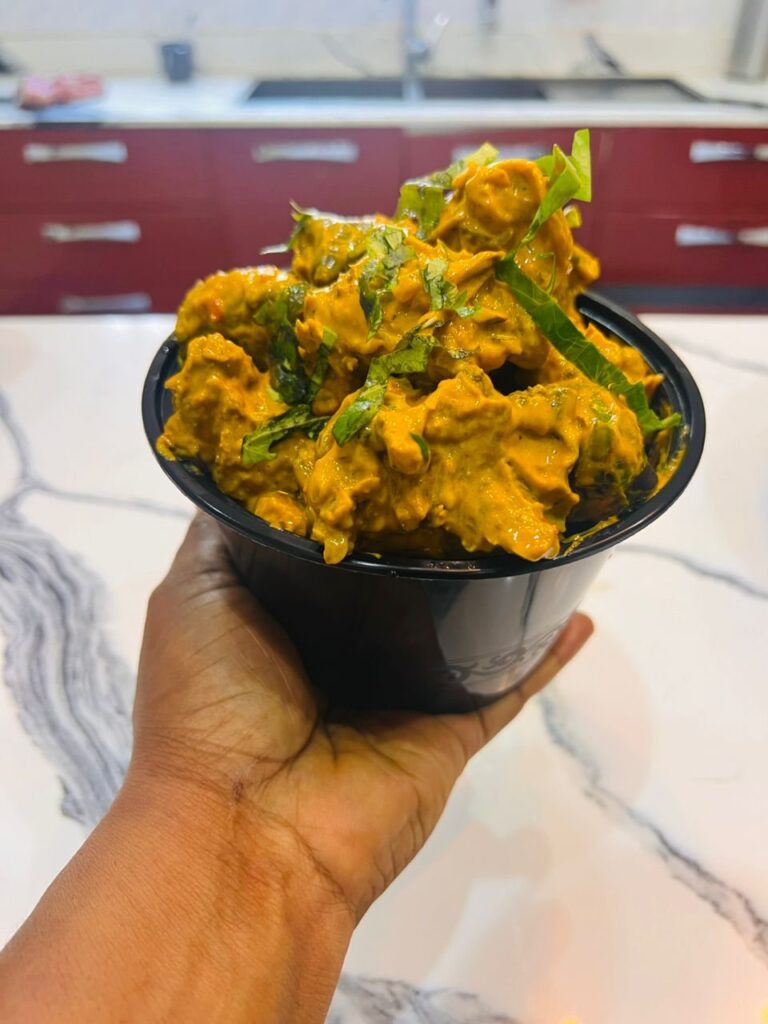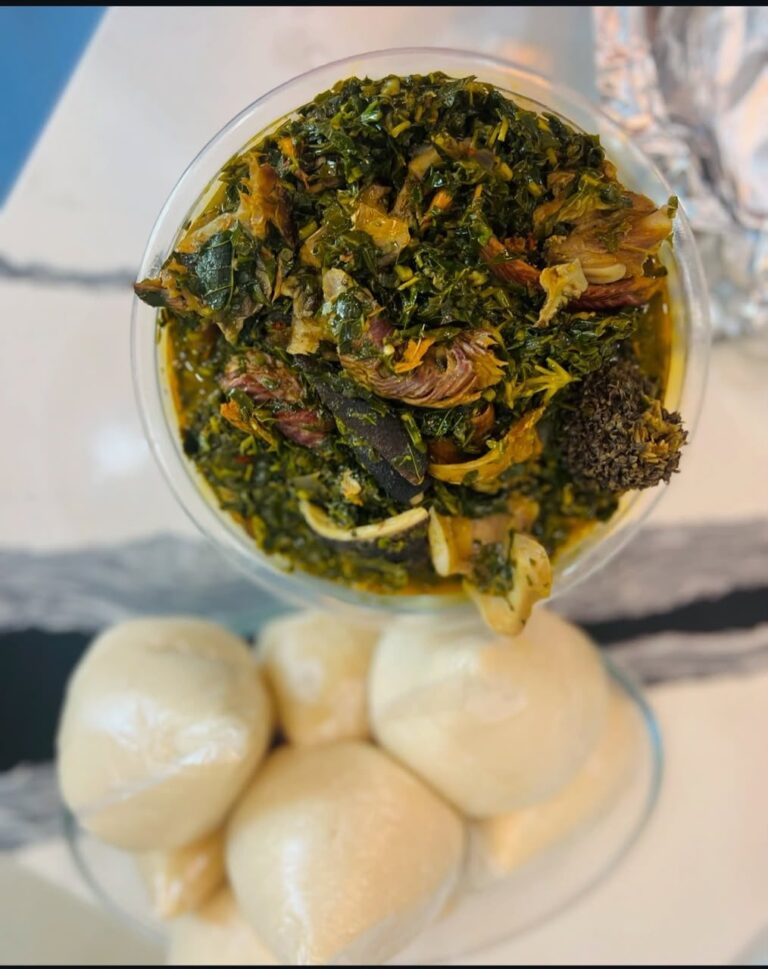
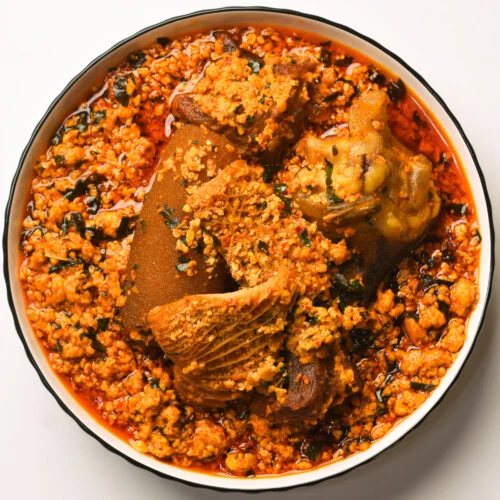
Ogbono is loved partly because of texture. A well-made ogbono soup stretches, clings to swallow and gives each bite a satisfying pull. That draw texture is not a mistake. It is the point.
For people new to Nigerian food, ogbono can be confusing at first because it behaves differently from egusi, oha, bitterleaf or nsala. Once the ingredient is explained, the soup becomes easier to enjoy.
This guide explains ogbono as an ingredient: what it is, what it looks like, how it tastes, why it draws, how it compares with egusi, how to buy and store it, and how to connect it to ordering.
Quick Summary
Ogbono is the seed ingredient used to make ogbono soup, one of Nigeria’s well-known draw soups. Ground ogbono gives soup a stretchy, clingy texture that works especially well with swallow foods such as eba, fufu, semovita and pounded yam.
For the ingredient overview, read Understanding Nigerian Ingredients and Spices. For the finished soup, read Ogbono Soup: Why It Is One of Nigeria’s Most Loved Soups and The Ultimate Guide to Nigerian Soups.
Ingredient Overview
Ogbono is a seed commonly ground and used to make ogbono soup. It is valued for the draw texture it creates in soup.
In cooking, ogbono is often combined with palm oil, stock, pepper, crayfish, meat, fish, leafy vegetables or other ingredients depending on the kitchen and preference.
Why Nigerians Love It
Ogbono creates a soup texture that works beautifully with swallow. It clings to eba, fufu, semovita and pounded yam, making the meal feel rich and complete.
Taste Profile
Ogbono has a nutty, savoury and slightly earthy taste. Its flavour should feel rounded, not stale or bitter.
The finished soup depends on more than ogbono. Palm oil, stock, crayfish, fish, meat and seasoning shape the result.
Appearance
Ground ogbono is usually a brownish powder or meal. In soup, it creates a glossy, stretchy texture.
If ground ogbono smells stale, rancid or unpleasant, the quality may be poor. Freshness matters because old ogbono can weaken the eating experience.
Common Uses
| Use | What Ogbono Does |
|---|---|
| Ogbono soup | Creates the soup’s draw texture and body. |
| Soup-and-swallow meals | Helps soup cling to swallow. |
| Mixed soup styles | May appear with vegetables or other soup ingredients depending on style. |
| Group meals | Works well for diners who enjoy draw soups. |
For swallow pairing, use How to Choose the Best Swallow for Every Nigerian Soup and What Is the Best Swallow for Every Nigerian Soup?.
Regional Variations
Ogbono soup varies across Nigeria. Some versions are plain and draw-focused. Some include vegetables. Some are thicker. Some include more seafood or meat.
Because styles vary, article copy should avoid saying there is only one proper ogbono soup. It is better to describe the ingredient’s main role: draw, body and savoury depth.
Storage Tips
Store ground ogbono sealed, dry and away from heat. Moisture can damage quality. Strong odours can also affect ground ingredients.
For cooked ogbono soup, follow safe storage guidance for soups and keep swallow separate where possible. For soup storage context, link to How to Store Nigerian Soups Properly.
Buying Tips
Good ogbono should smell fresh and nutty, not stale. If buying ground ogbono, choose a trusted source with good turnover.
If ordering from a restaurant, ask about the finished soup: protein, spice level, swallow pairing, portion size and packaging. Use Menu for current meals and Contact for availability questions.
Possible Substitutions
Ogbono has no exact substitute when the goal is true ogbono soup. Okra can create draw texture, but it tastes different. Egusi can thicken soup, but it does not draw like ogbono.
| Alternative | What It Can Do | What Changes |
|---|---|---|
| Okra | Adds draw texture | Flavour and body change. |
| Egusi | Adds thick body | No ogbono draw texture. |
| Other thickeners | Add body | Dish becomes a different soup. |
Common Misconceptions
- Ogbono and egusi are not the same.
- Draw texture is normal for ogbono soup.
- Ogbono is not just a thickener; it shapes the eating experience.
- Okra can draw, but it does not taste like ogbono.
- All ogbono soup does not look exactly the same.
- Ingredient articles should not make unsupported medical or nutrition claims.
Helpful Tables
| Question | Practical Answer |
|---|---|
| What is ogbono? | A seed ingredient ground for ogbono soup. |
| What does it do? | Creates draw texture and body. |
| Is it the same as egusi? | No. Egusi thickens; ogbono draws. |
| Best swallows? | Eba, fufu, semovita and pounded yam. |
| Best related soup guide? | Ogbono Soup: Why It Is One of Nigeria’s Most Loved Soups. |
Ready To Order?
Want to try ogbono as a finished soup? Browse AdaOwerri Kitchen’s Menu for current soups, soup-and-swallow options, rice meals and sides.
For family, office or event meals, use Bulk Orders so soup quantity, proteins, swallow options, packaging and delivery timing can be confirmed.
Need Help Choosing?
Not sure whether ogbono soup is available or which swallow to choose? Message AdaOwerri Kitchen through WhatsApp on the website or use Contact to ask about current options.
Frequently Asked Questions
What is ogbono?
Ogbono is a seed ingredient commonly ground and used to make ogbono soup, a Nigerian draw soup.
Why does ogbono soup draw?
Ground ogbono naturally gives the soup a stretchy draw texture when cooked properly.
Is ogbono the same as egusi?
No. Ogbono creates draw texture, while egusi creates a rich, nutty thick soup.
What does ogbono taste like?
It has a nutty, savoury and slightly earthy taste.
What swallow goes with ogbono?
Eba, fufu, semovita and pounded yam can all work well.
Can ogbono be substituted?
There is no exact substitute. Okra can create draw texture, but the flavour and soup identity change.
Conclusion
Ogbono is loved because it creates a texture many Nigerian soup lovers recognise immediately. It draws, clings and works naturally with swallow foods.
Understanding ogbono also helps readers understand why it is different from egusi, okra, bitterleaf or oha. For more context, read Understanding Nigerian Ingredients and Spices, Ogbono Soup, The Ultimate Guide to Nigerian Soups, The Complete Guide to Nigerian Swallow Foods, The Complete Guide to Nigerian Rice Dishes and The Complete Guide to Nigerian Food Culture.