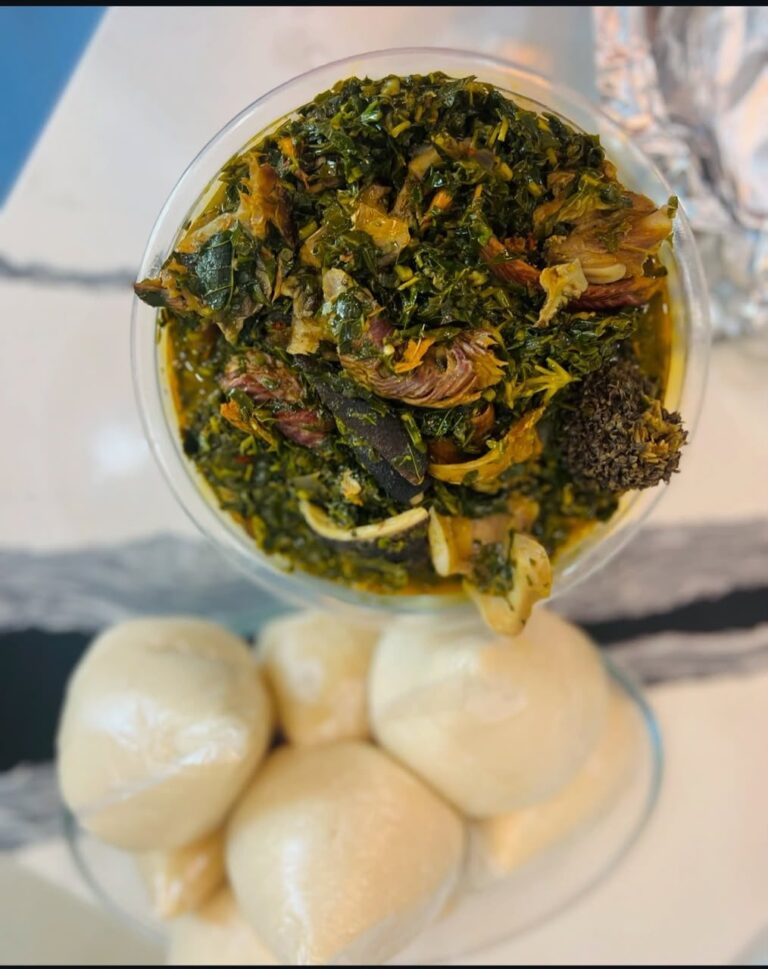
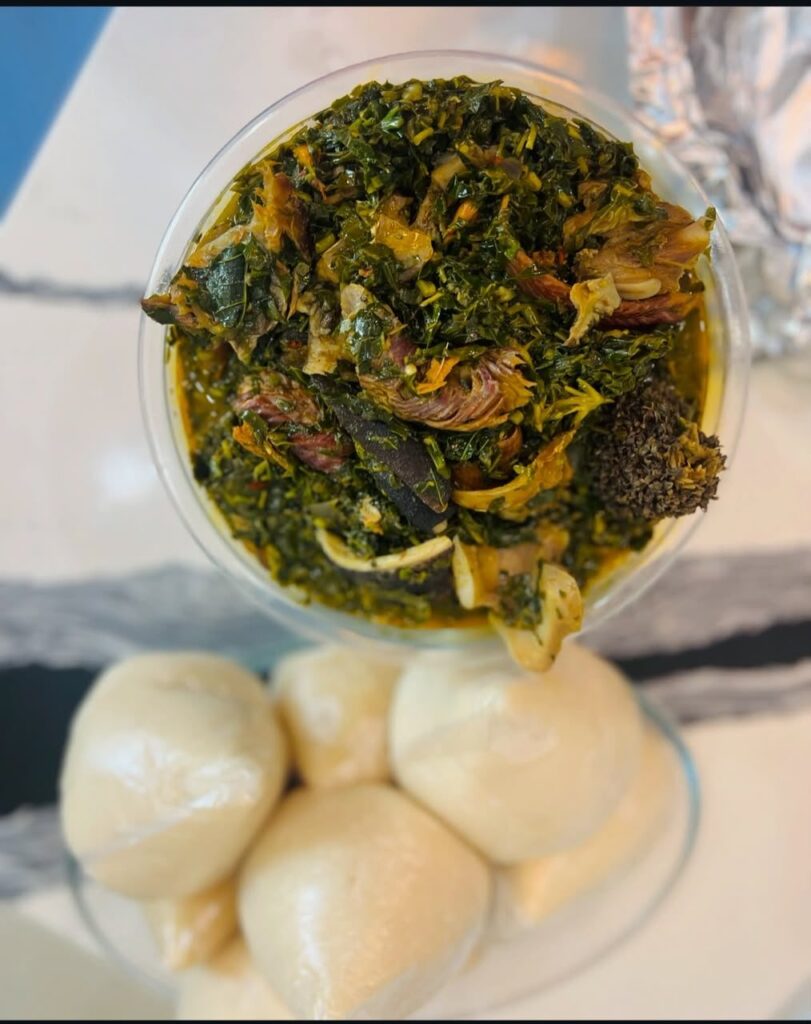
If you have heard someone say “soup and swallow” and wondered what the swallow part means, you are not alone. The word can sound unusual at first because it does not describe one single dish. It describes a whole category of soft starchy foods eaten with Nigerian soups.
Swallow is central to many Nigerian meals because it completes the soup. The soup brings pepper, stock, vegetables, seafood, meat, fish, or other proteins. The swallow brings texture and body. Together, they create the full eating experience.
This guide explains swallow food in plain language: what it is, how it is eaten, the main types, how to choose one, how it differs from rice, and what to ask before ordering from AdaOwerri Kitchen.
Quick Answer
Swallow food is a soft starchy Nigerian food eaten with soups. It is shaped into small portions, dipped into soup, and eaten with the soup’s sauce, vegetables, and protein. Common swallow foods include pounded yam, eba, fufu, semovita, amala, wheat swallow, and plantain fufu.
For the full parent guide, read The Complete Guide to Nigerian Swallow Foods. For soup context, start with The Ultimate Guide to Nigerian Soups. If you are comparing soup-and-swallow meals with rice meals, the Complete Guide to Nigerian Rice Dishes is the natural next stop.
What Is Swallow Food?
Swallow food is a soft, molded starchy food served with soup. A diner takes a small piece, shapes it lightly, dips it into soup, and eats it with the soup. The swallow itself is usually mild; the soup provides most of the flavour.
The term “swallow” describes the eating style. Many people do not chew it heavily like rice or yam. They take a small portion with soup and swallow the bite comfortably.
Is Swallow One Food Or Many Foods?
Swallow is a category. Pounded yam, eba, fufu, semovita, amala, wheat swallow, and plantain fufu are different foods inside that category.
They may look similar to someone new to Nigerian food, but they differ in base ingredient, texture, taste, colour, weight, and soup pairing.
Is Swallow The Same As Fufu?
No. Fufu is one type of swallow. It is common for people to use “fufu” casually, but in Nigerian food writing it is better to be precise. Pounded yam is not fufu. Eba is not fufu. Semovita is not fufu.
Common Nigerian Swallow Foods
| Swallow | Common Base | Texture | Best Pairings |
|---|---|---|---|
| Pounded yam | Yam or yam flour | Smooth, stretchy, substantial | Egusi, oha, nsala, bitterleaf |
| Eba | Garri from cassava | Firm, moldable, slightly grainy | Egusi, afang, ogbono, okra |
| Fufu | Often cassava-based, depending on style | Soft, elastic, sometimes tangy | Oha, egusi, afang, nsala |
| Semovita | Semolina-style flour | Smooth, mild, soft | Egusi, ogbono, okra, vegetable soup |
| Amala | Yam flour or other regional bases | Soft, darker, earthy | Ewedu, gbegiri, okra, ogbono |
| Wheat swallow | Wheat-based flour | Smooth, mild, slightly firm | Egusi, vegetable soup, okra |
| Plantain fufu | Plantain-based | Smooth, fuller taste | Afang, oha, vegetable soup |
This table is guidance, not a rule. Preferences vary by household, region, and individual taste.
How Swallow Is Eaten
The classic method is simple:
- Take a small piece of swallow.
- Shape it lightly.
- Dip it into soup.
- Pick up sauce, vegetables, or protein.
- Eat the bite together.
Some people use their hands. Some use a spoon, especially in public or office settings. The important thing is not the method but the pairing.
First-Time Serving Tip
Start with small portions. A large piece of swallow can feel heavy and distract from the soup. Smaller bites let the diner taste the soup properly.
Swallow Food Compared With Rice
| Question | Swallow Food | Rice Dishes |
|---|---|---|
| Main role | Carries soup | Carries stew, sauce, or its own seasoning |
| Texture | Smooth, molded, soft or firm | Grain-based |
| Typical pairing | Nigerian soups | Stew, sauce, protein, sides |
| Eating style | Dipped into soup | Eaten with fork, spoon, or hand |
| Good for | Soup-centred meals | Lunch packs, rice bowls, parties |
For people planning a mixed meal, rice and swallow can sit on the same menu. A family order might include egusi with pounded yam for some diners and jollof or fried rice for others. Use Choosing the Right Rice for Every Nigerian Meal when rice choices are part of the order.
Serving Suggestions
Choose the soup first, then the swallow. Thick soups such as egusi can take pounded yam, eba, fufu, or semovita. Leafy soups such as oha and afang often work well with fufu, pounded yam, eba, or plantain fufu. Draw soups such as ogbono and okra can pair well with eba, fufu, semovita, or wheat swallow.
For more detail, link readers to What Is the Best Swallow for Every Nigerian Soup?, Egusi Soup Explained, Everything You Need to Know About Oha Soup, and The Complete Guide to Afang Soup.
Storage Advice
Swallow is best served fresh and warm. Once it cools, texture can change quickly. It may become firmer, drier, stickier, or less smooth depending on the type.
If leftovers are kept, store soup and swallow separately, use clean covered containers, avoid leaving cooked food sitting out for long periods, and follow current local food-safety guidance. For group orders, ask about packaging through Bulk Orders before the meal is prepared.
Quick Tips
- Swallow is a category, not one dish.
- Choose the soup before choosing the swallow.
- Pounded yam is a smooth classic first option.
- Eba is firmer and more direct.
- Fufu is soft and elastic.
- Semovita is mild and approachable.
- Keep soup and swallow separate for delivery when possible.
Common Mistakes
- Calling every swallow fufu.
- Ordering soup without asking what swallow comes with it.
- Assuming all swallows have the same texture.
- Serving too large a portion to first-time diners.
- Mixing soup and swallow too early for delivery.
- Making health claims about swallows without evidence.
- Forgetting that preferences vary across Nigeria.
Ready To Order?
Want to turn this guide into a meal? Browse AdaOwerri Kitchen’s Menu for current soup-and-swallow options, soups, proteins, rice meals, and sides.
For family meals, offices, or events, use Bulk Orders so soup, swallow, quantity, packaging, and timing can be confirmed before the order is prepared.
Need Help Choosing?
Not sure whether to choose pounded yam, eba, fufu, semovita, or plantain swallow? Message AdaOwerri Kitchen through WhatsApp on the website or use Contact to ask what is available today and what pairs best with your preferred soup.
Frequently Asked Questions
What is swallow food?
Swallow food is a soft starchy Nigerian food eaten with soup. Common examples include pounded yam, eba, fufu, semovita, amala, wheat swallow, and plantain fufu.
Why is it called swallow?
The name describes the eating style. A small portion is dipped into soup and swallowed with the soup rather than chewed heavily like rice.
What is swallow eaten with?
Swallow is usually eaten with Nigerian soups such as egusi, oha, afang, nsala, ogbono, okra, and bitterleaf soup.
Is fufu the same as swallow?
Fufu is one type of swallow. Swallow also includes pounded yam, eba, semovita, amala, wheat swallow, and plantain fufu.
What swallow should I try first?
Pounded yam, eba, or semovita are often easy starting points. Choose based on whether you prefer smooth, firm, or mild texture.
Can swallow be ordered for delivery?
Yes, when available. Ask whether the soup and swallow will be packed separately and check Delivery details before ordering.
Conclusion
Swallow food becomes easy to understand once you see it as the partner to Nigerian soup. It gives the soup body, texture, and a complete meal structure.
Start with the soup, then choose the swallow. Pounded yam is smooth and classic. Eba is firm and satisfying. Fufu is soft and elastic. Semovita is mild. Amala, wheat swallow, and plantain fufu give diners more options depending on preference and availability.
For the bigger picture, read The Complete Guide to Nigerian Swallow Foods, The Ultimate Guide to Nigerian Soups, and The Complete Guide to Nigerian Rice Dishes.