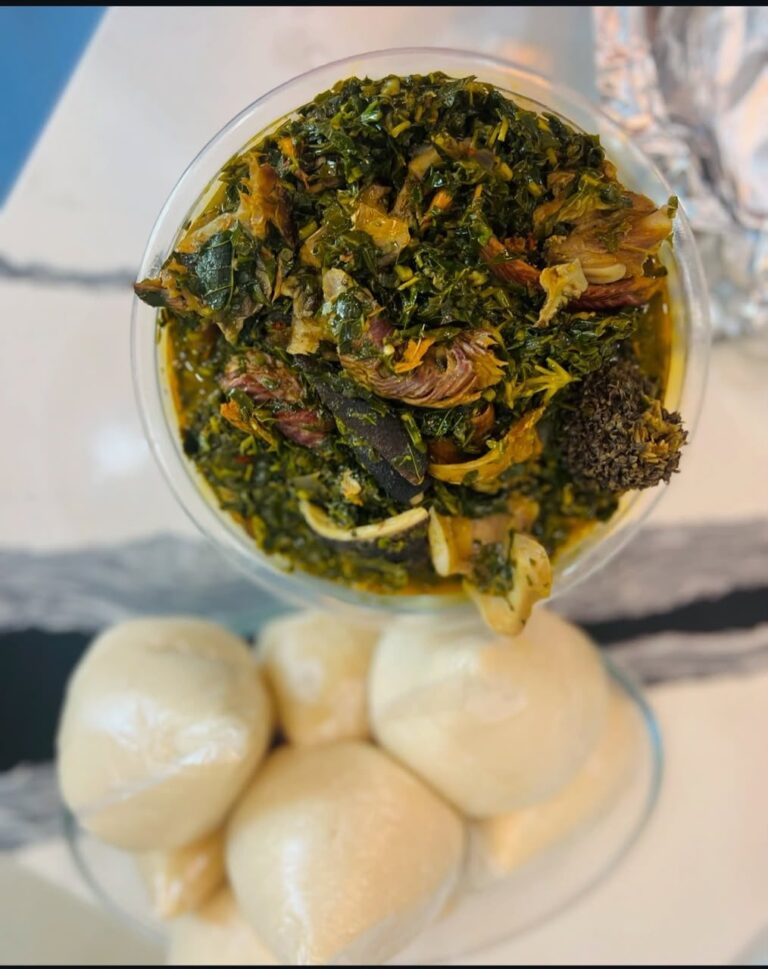
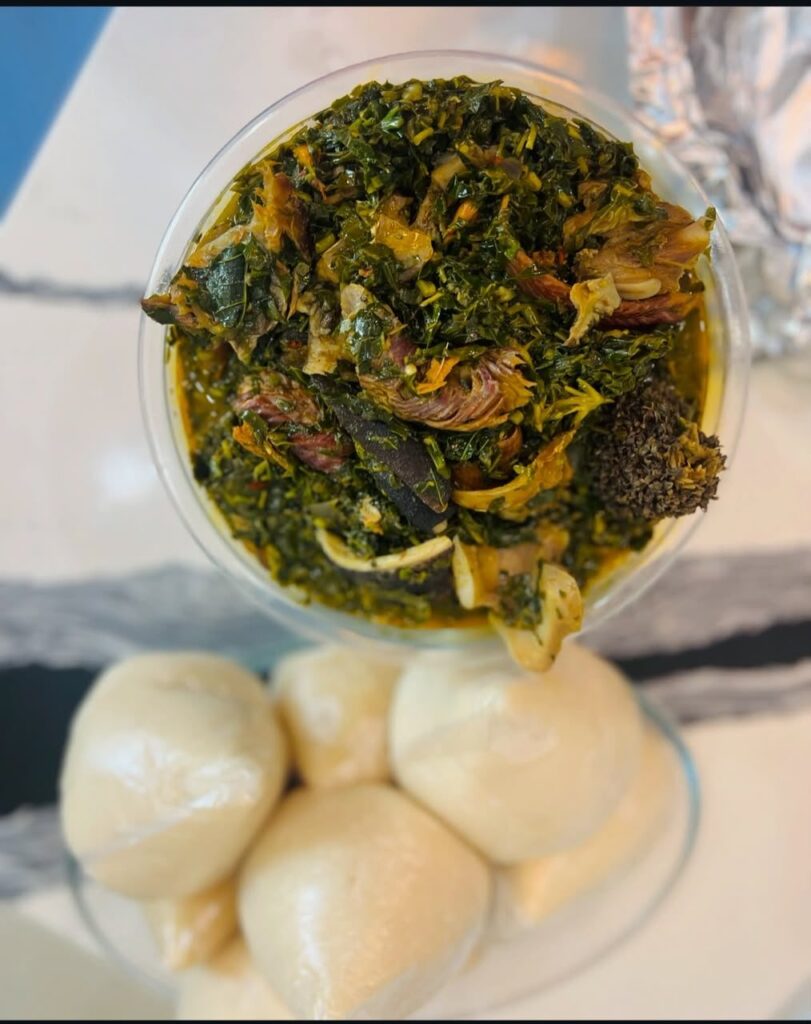
Afang soup is one of the Nigerian soups that proves vegetables can carry serious flavor. It is leafy, textured, savory and often protein-friendly. For people who enjoy soups with body and greens, Afang can be deeply satisfying.
If Egusi is rich because of ground melon seeds, Afang is rich because of leaves, stock, palm oil, crayfish, proteins and careful cooking. It is not a thin vegetable broth. It is a full soup designed to work with swallow.
This guide explains what Afang soup is, how it tastes, what ingredients usually shape it, how it compares with other leafy Nigerian soups, which swallows pair best and how to order it from AdaOwerri Kitchen.
Quick Answer
Afang soup is a vegetable-rich Nigerian soup commonly associated with southern Nigerian cooking, especially Cross River and Akwa Ibom food traditions. It is known for its leafy texture, savory flavor and ability to hold generous proteins.
It is usually eaten with swallow such as eba, fufu or pounded yam. Afang is a good choice for people who want a Nigerian soup that feels traditional and substantial without relying on ground seeds like Egusi. For the wider soup family, read The Ultimate Guide to Nigerian Soups.
What Is Afang Soup?
Afang soup is a leafy Nigerian soup made with vegetables such as afang or ukazi leaves, often combined with other greens depending on the kitchen. It may include palm oil, crayfish, stock, pepper, meat, fish, dry fish, stockfish or seafood.
The exact preparation varies by household and region. Some versions are more vegetable-forward. Some are richer with proteins. Some are softer, while others keep a stronger leafy chew.
Afang Soup At A Glance
| Feature | What To Expect |
|---|---|
| Main character | Leafy, savory, substantial |
| Common leaves | Afang or ukazi, often with other greens |
| Texture | Leafy and slightly chewy |
| Flavor | Deep, vegetable-forward, savory |
| Common pairings | Eba, fufu, pounded yam |
| Good for | Vegetable lovers, family meals, traditional soup discovery |
Regional And Cultural Context
Afang soup is commonly associated with southern Nigerian food traditions, especially Cross River and Akwa Ibom contexts. It is often discussed beside other vegetable-rich soups such as Edikang Ikong.
As with many Nigerian dishes, it is best to avoid claiming one rigid origin or one correct method. Families and restaurants adapt ingredients based on access, taste, budget and tradition. What makes Afang recognizable is its leafy depth and the role of the afang or ukazi-style leaf.
Common Ingredients In Afang Soup
| Ingredient | Role In Afang Soup | What It Adds |
|---|---|---|
| Afang or ukazi leaves | Main leafy identity | Earthy flavor and chew |
| Other greens | Softness and volume | Balance and body |
| Palm oil | Richness and color | Rounder soup base |
| Crayfish | Savory depth | Seafood flavor |
| Stock | Foundation | Connects vegetables and proteins |
| Pepper | Heat and aroma | Spice level |
| Assorted meat or fish | Protein | Substance and flavor |
| Stockfish or dry fish | Traditional depth | Strong savory note |
For ingredient background, use Understanding Nigerian Ingredients and Spices alongside this article.
How Afang Soup Gets Its Texture
Afang soup is not supposed to feel smooth like a blended sauce. The leafy texture is part of the experience. The leaves should be noticeable, but the soup should still be enjoyable to eat with swallow.
If the leaves are too coarse, the soup can feel rough. If the vegetables are overworked, the soup can lose character. Good Afang balances chew, oil, stock, protein and seasoning.
Afang vs Edikang Ikong
| Question | Afang Soup | Edikang Ikong |
|---|---|---|
| Main identity | Afang or ukazi-style leafy depth | Dense vegetable-rich soup |
| Texture | Leafy, sometimes more chewy | Dense, green and protein-friendly |
| Common appeal | Traditional leafy flavor | Vegetable abundance |
| Pairings | Eba, fufu, pounded yam | Eba, fufu, plantain swallow |
Both can be excellent vegetable-forward soups, but they do not taste or feel identical.
Taste And Serving Experience
Afang soup is savory, leafy and full-bodied. It may feel more textured than Oha soup because the leaves are firmer. It may feel less nutty than Egusi because it does not depend on ground melon seeds.
The flavor should be layered: vegetables, stock, crayfish, proteins, pepper and oil working together. It should not taste flat or watery.
Best Swallow Pairings For Afang Soup
| Swallow | Why It Works | Best For |
|---|---|---|
| Eba | Firm texture holds leafy soup well | Classic textured pairing |
| Fufu | Soft texture balances leafy chew | Traditional comfort meal |
| Pounded yam | Smooth and substantial | First-time diners who want a polished swallow |
| Plantain swallow | Fuller taste, if available | Vegetable-forward meals |
For more pairings, read What Is the Best Swallow for Every Nigerian Soup?.
When To Choose Afang Soup
Afang is a strong choice when:
- You enjoy leafy soups.
- You want a soup that feels traditional and substantial.
- You want something different from Egusi.
- You are ordering for people who enjoy vegetable texture.
- You want a soup that can work for family meals or bulk orders.
If your group includes first-time diners, explain that Afang is more textured than some soups. Pair it with a familiar swallow such as eba or pounded yam.
Ordering Afang Soup In Accra
AdaOwerri Kitchen’s project menu includes Afang soup in meal pack and bulk formats. Before ordering, confirm the current menu, protein, swallow, portion size and delivery timing.
Useful questions:
- Is Afang available today?
- What protein comes with it?
- Which swallow is included or recommended?
- Is it available as a meal pack or bulk order?
- Can it be delivered to my area?
- How should it be packed for travel?
Use the Menu for current meal ideas, Delivery for location questions and Contact for special requests.
Quick Tips
- Choose eba if you enjoy a firmer swallow.
- Choose fufu if you want a softer balance.
- Ask about protein before ordering.
- For bulk Afang, confirm litre size and serving plan.
- Keep soup and swallow separate for delivery when possible.
- If guests are new to leafy soups, explain the texture before serving.
Common Mistakes
- Expecting Afang to feel like a smooth soup.
- Treating all leafy Nigerian soups as the same.
- Choosing a swallow without considering the leaf texture.
- Assuming the same protein comes with every order.
- Ordering Afang for a large group without confirming spice level and packaging.
- Publishing exact menu availability without checking current operations.
Ready To Order?
Want to try Afang soup or compare it with Egusi, Oha or Nsala? Browse AdaOwerri Kitchen’s Menu for current soup-and-swallow options. For family meals, office lunches or events, use Bulk Orders so portions, proteins and timing can be confirmed.
Need Help Choosing?
Need help deciding whether Afang is right for your order? Message AdaOwerri Kitchen on WhatsApp through the website and ask about current Afang availability, swallow options, delivery timing and bulk portions.
FAQs About Afang Soup
What is Afang soup?
Afang soup is a leafy Nigerian soup commonly associated with southern Nigerian cooking. It is known for its vegetable-rich texture and savory flavor.
What does Afang soup taste like?
Afang tastes leafy, savory and substantial. It often has a deeper vegetable texture than softer soups such as Oha.
What swallow goes best with Afang soup?
Eba, fufu and pounded yam all pair well with Afang. Eba is especially good if you enjoy firm swallow with leafy soup.
Is Afang soup the same as Edikang Ikong?
No. Both are vegetable-rich soups, but they use different vegetable profiles and can have different textures.
Is Afang soup good for first-time diners?
Yes, if the diner is comfortable with leafy texture. If they want something milder or smoother, Oha or Egusi may be easier first.
Can Afang soup be ordered in bulk?
Bulk Afang may be available, but current litre sizes, proteins, prices and lead times should be confirmed directly with AdaOwerri Kitchen.
Conclusion
Afang soup is a strong Nigerian leafy soup for people who enjoy texture, vegetables and deep savory flavor. It is not trying to be smooth or simple. Its appeal is in the layered greens, stock, protein and swallow pairing.
Choose Afang when you want a vegetable-forward soup that still feels rich and filling. Pair it with eba, fufu or pounded yam. For family or event orders, confirm the portion size and packaging before the day you need the food.
For wider soup context, read The Ultimate Guide to Nigerian Soups and compare Afang with Everything You Need to Know About Oha Soup or Bitterleaf Soup Explained.