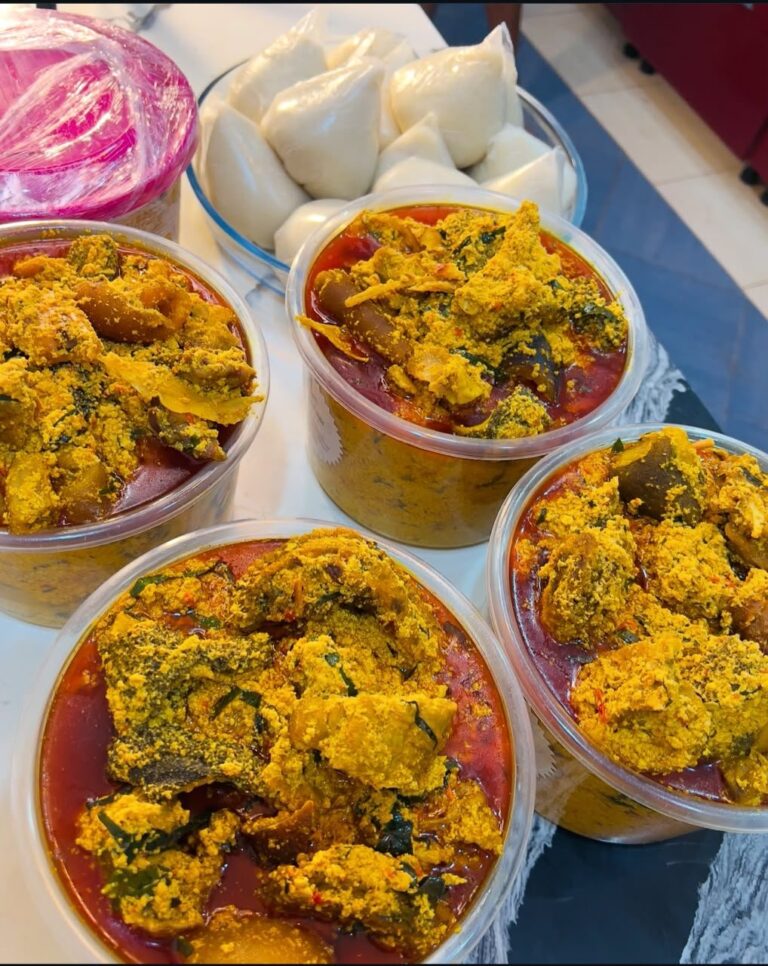
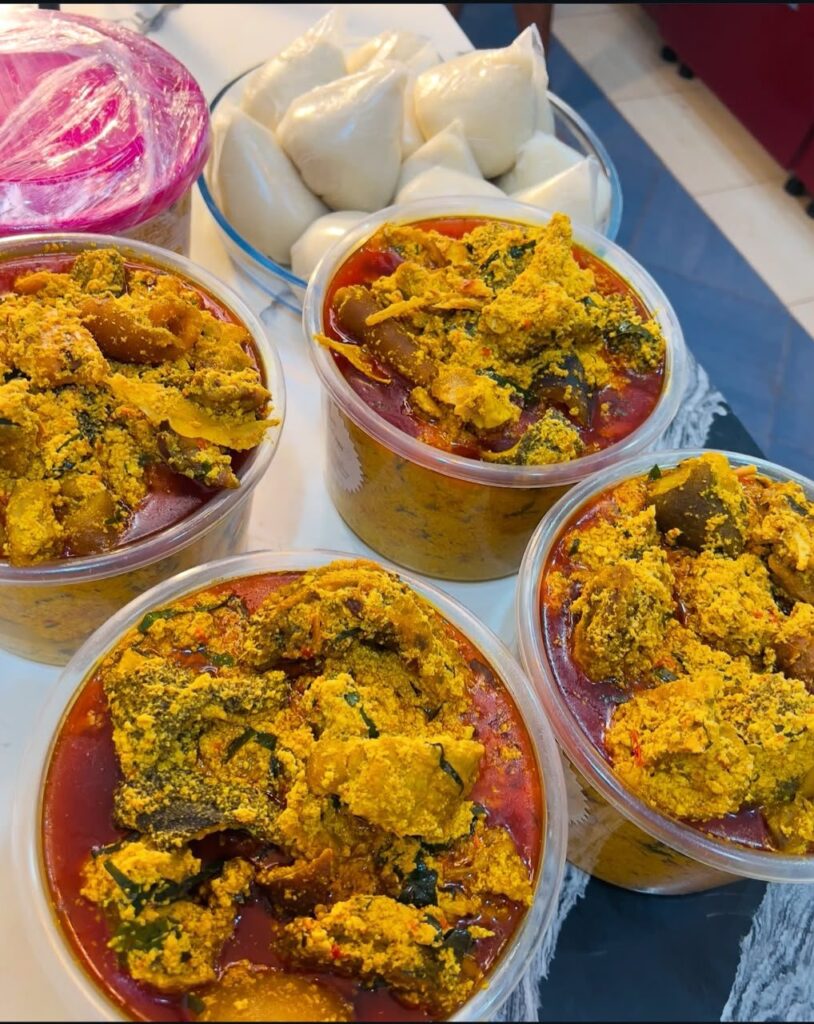
Nigerian soups are often cooked in generous portions. A family may order Egusi for the weekend. Someone may keep Oha for the next day. A host may receive bulk soup for guests and need to manage leftovers after serving.
Storage matters because Nigerian soups are rich. They may include meat, fish, stockfish, dry fish, vegetables, palm oil, ground seeds or thickeners. Those ingredients can taste beautiful when handled well, but the soup still needs careful cooling, packing and reheating.
This guide explains how to store Nigerian soups properly after cooking, delivery or bulk ordering. It covers containers, fridge storage, freezing, soup-and-swallow separation, labelling and common mistakes.
Quick Answer
Store Nigerian soups by cooling them safely, packing them in clean sealed containers, keeping soup separate from swallow and refrigerating or freezing promptly. Use smaller containers when possible so the soup cools and reheats more evenly.
Food safety depends on time, temperature, ingredients and handling, so final live guidance should be checked against trusted food safety sources. This article gives practical restaurant-style storage principles, not medical or regulatory advice.
For soup types and textures, read The Ultimate Guide to Nigerian Soups. For reheating, read How to Reheat Nigerian Soups Without Losing Flavour.
Storage Basics
Good storage starts before the soup goes into the fridge or freezer.
| Step | Why It Matters |
|---|---|
| Cool safely | Hot soup should not sit around for long periods. |
| Use clean containers | Reduces contamination risk and protects flavor. |
| Store in smaller portions | Makes reheating easier and avoids repeated warming. |
| Seal properly | Prevents spills, odors and drying. |
| Label containers | Helps you track soup type and storage date. |
| Keep swallow separate | Protects texture and prevents sogginess. |
When in doubt, follow current public food safety guidance and AdaOwerri Kitchen’s instructions for the specific order.
Cooling Nigerian Soups
Cooling is one of the most important storage steps. A large pot or deep container can stay hot for a long time, especially with thick soups such as Egusi, Bitterleaf or Oha.
Practical cooling tips:
- Move soup into smaller clean containers when appropriate.
- Avoid sealing very hot soup tightly for long periods before cooling.
- Keep containers covered enough to protect the food.
- Do not leave cooked soup at room temperature for long periods.
- Refrigerate or freeze as soon as it is safe and practical.
Because exact safety timing depends on local guidance, the final WordPress article should link to a trusted food safety source before adding specific time limits.
Best Containers For Nigerian Soups
Use containers that seal well and can handle soup without leaking. Nigerian soups may be oily, thick, spicy or broth-like, so weak containers can create a mess.
| Container Type | Best For | Watch-Out |
|---|---|---|
| Airtight plastic containers | Fridge and short-term storage | Use food-safe containers only. |
| Freezer-safe containers | Longer storage | Leave room for expansion. |
| Shallow containers | Faster cooling | May need more fridge space. |
| Leak-resistant bowls | Delivery leftovers | Check lids before storing. |
| Large bulk containers | Events and family orders | Divide before repeated reheating. |
For bulk soup orders from AdaOwerri Kitchen, ask whether the containers are best for transport only or suitable for storage.
Fridge Storage
Fridge storage is useful when you plan to eat the soup soon. Thick soups, leafy soups and lighter soups can all be refrigerated, but texture may change.
Thick Soups
Egusi and Bitterleaf may thicken after cooling. That is normal. Reheating gently with the right moisture can help restore texture.
Leafy Soups
Oha and Afang should be stored carefully because leaves can soften further after storage. Avoid repeated reheating if possible.
Lighter Soups
Nsala and peppery broths need leak-proof containers because they are more liquid.
Freezer Storage
Freezing is useful for longer storage or bulk orders. Portioning matters. Instead of freezing one very large container, divide soup into portions that match how you will eat it later.
Good freezer habits:
- Use freezer-safe containers.
- Label soup type and date.
- Freeze in meal-size portions.
- Keep soup separate from swallow.
- Avoid thawing and refreezing repeatedly.
Some soups change texture after freezing, especially leafy soups. They can still be enjoyable, but the texture may not be exactly the same as fresh.
Storing Soup And Swallow Separately
Soup and swallow should usually be stored separately. If swallow sits inside soup for too long, it can absorb liquid, soften, harden or lose its best texture.
This matters for:
- Pounded yam.
- Fufu.
- Eba.
- Semovita.
- Plantain swallow.
If ordering delivery, ask whether soup and swallow will be packed separately. For current delivery information, check Delivery.
Storage Tips By Soup Type
| Soup | Storage Note | Reheating Watch-Out |
|---|---|---|
| Egusi | May thicken after cooling | Warm gently and stir carefully. |
| Oha | Leaf texture can soften | Avoid overcooking during reheating. |
| Afang | Leaf texture is important | Reheat gently so greens do not feel tired. |
| Nsala | More liquid, needs secure container | Avoid boiling too aggressively. |
| Ogbono | Draw texture can change | Reheat slowly and stir gently. |
| Bitterleaf | Rich soup, good portioning helps | Avoid repeated reheating. |
For reheating details, use How to Reheat Nigerian Soups Without Losing Flavour.
Bulk Soup Storage
Bulk soup orders need a plan before the food arrives. If you are ordering litres of soup for family, office or events, decide:
- Will the soup be served immediately?
- Will leftovers be kept?
- Who will receive the order?
- Are there enough clean containers?
- Is there fridge or freezer space?
- Will the soup be portioned before storage?
Use Bulk Orders to confirm packaging, portions and timing. Use Contact for custom storage or serving questions.
Quick Tips
- Store soup and swallow separately.
- Portion soup before freezing.
- Label containers clearly.
- Do not repeatedly reheat the same large container.
- Keep lighter soups in leak-proof containers.
- Follow current food safety guidance for exact timing.
- Ask AdaOwerri Kitchen for handling advice when ordering bulk soup.
Common Mistakes
- Leaving soup out for too long before storing.
- Storing a large bulk container without portioning.
- Mixing swallow into soup before storage.
- Freezing soup in containers that are not freezer-safe.
- Forgetting to label containers.
- Reheating, cooling and reheating the same soup repeatedly.
- Treating all soup textures the same.
Ready To Order?
Planning to order soup for later? Browse AdaOwerri Kitchen’s Menu for current soup options and use Bulk Orders for larger portions. Before finalizing, confirm packaging, delivery timing and storage guidance for your specific order.
Need Help Choosing?
Ordering soup for family, office or an event? Message AdaOwerri Kitchen on WhatsApp through the website and ask how the soup will be packed, when it should arrive and whether any special storage instructions apply.
FAQs About Storing Nigerian Soups
Can Nigerian soups be stored in the fridge?
Yes, many Nigerian soups can be refrigerated when cooled and stored properly in sealed containers. Follow current food safety guidance for timing.
Can Nigerian soups be frozen?
Many soups can be frozen, especially when portioned properly. Texture may change after freezing, particularly with leafy soups.
Should soup and swallow be stored together?
Usually no. Store soup and swallow separately to protect texture.
What is the best container for soup storage?
Use clean, food-safe, sealed containers. For freezing, use freezer-safe containers and leave room for expansion.
Can I store bulk soup in one large container?
It is often better to portion bulk soup into smaller containers so it cools, stores and reheats more easily.
Does Egusi soup get thicker after storage?
Yes, Egusi can thicken after cooling. Gentle reheating can help restore the texture.
Conclusion
Storing Nigerian soups properly protects flavor, texture and safety. Cool the soup carefully, use clean sealed containers, keep soup and swallow separate, portion bulk orders and label everything clearly.
Different soups behave differently. Egusi can thicken. Oha and Afang can soften. Nsala needs secure packaging. Ogbono’s draw texture can change. A little planning helps each soup stay enjoyable.
For soup choice, read The Ultimate Guide to Nigerian Soups. For practical next steps after storage, read How to Reheat Nigerian Soups Without Losing Flavour.