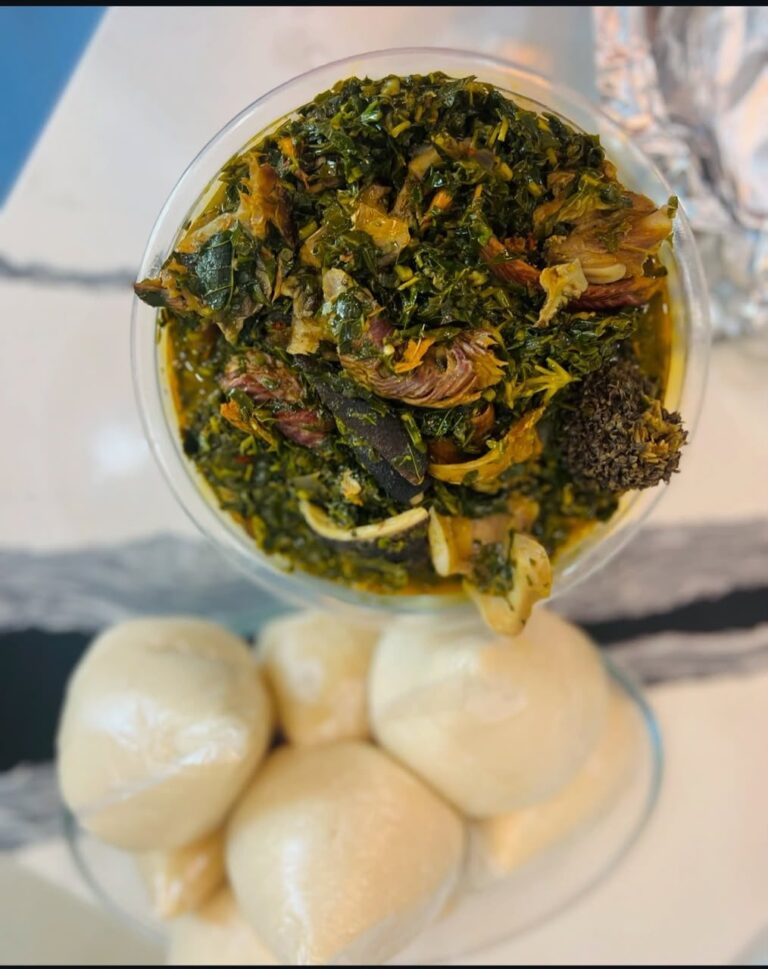
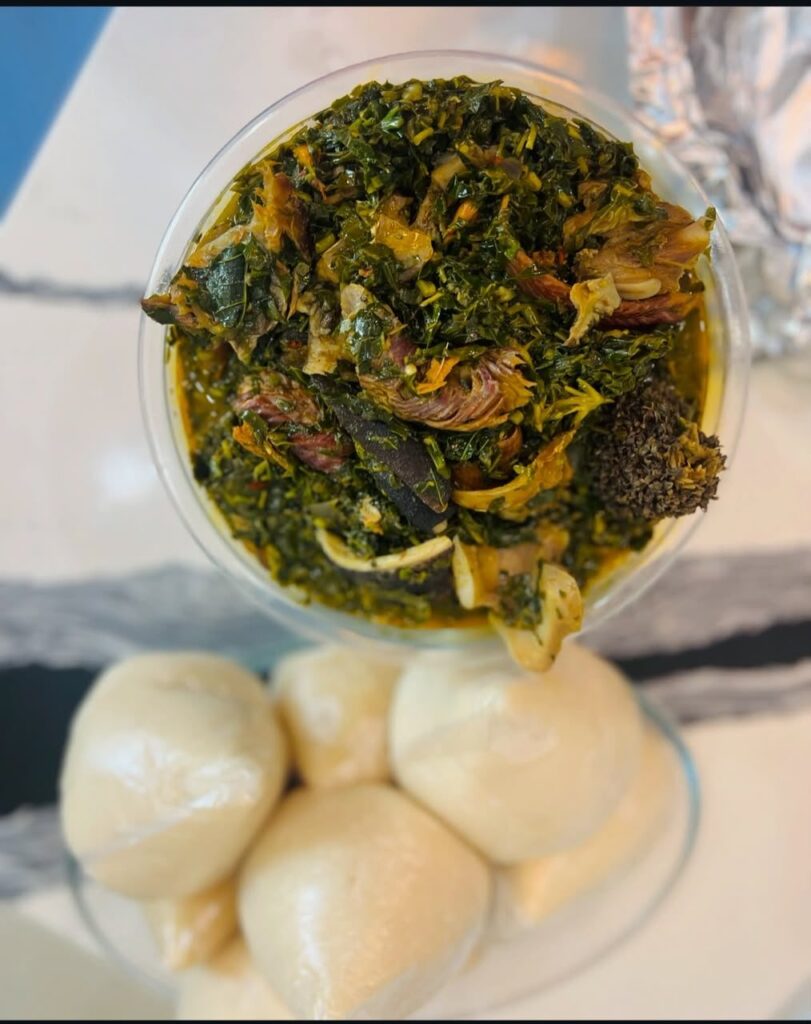
Fufu is one of the best-known swallow names, but it is also one of the most misunderstood. Some people use “fufu” to describe every swallow. That may happen in casual conversation, but it is not precise.
In Nigerian food writing, fufu is one type of swallow. It has its own texture, taste, and pairings. It can be soft, elastic, and sometimes mildly tangy depending on preparation.
This guide explains fufu clearly: what it is, how it differs from pounded yam and eba, which soups suit it, and what to ask before ordering.
Quick Answer
Fufu is a soft, elastic Nigerian swallow eaten with soups. Depending on preparation and region, it may be cassava-based or made from other starchy ingredients. Fufu works well with oha, egusi, afang, nsala, bitterleaf, ogbono, and vegetable soups.
For the full swallow overview, read The Complete Guide to Nigerian Swallow Foods. For soup comparison, read The Ultimate Guide to Nigerian Soups. For readers comparing soup-and-swallow meals with rice meals, link to The Complete Guide to Nigerian Rice Dishes.
What Is Fufu?
Fufu is a swallow made from starchy ingredients worked into a soft, cohesive form. In many Nigerian contexts, cassava-based fufu is common, but types and preparation styles vary by household, region, and kitchen.
The important point for the diner is texture. Fufu is usually softer and more elastic than eba, and it can feel more traditional than very neutral swallows such as semovita.
What Does Fufu Taste Like?
Fufu can taste mild or slightly tangy depending on the base and preparation. It should support the soup rather than overpower it.
Is Fufu The Same As Swallow?
No. Fufu is a swallow, but swallow includes many other foods such as pounded yam, eba, semovita, amala, wheat swallow, and plantain fufu.
Fufu At A Glance
| Feature | What It Means |
|---|---|
| Main role | Soft elastic swallow for soup meals |
| Common base | Often cassava-based, with variations |
| Texture | Soft, elastic, cohesive |
| Taste | Mild to slightly tangy |
| Best with | Oha, egusi, afang, nsala, bitterleaf |
| Ordering note | Confirm type, portion, soup, and packaging |
Types And Variations
Fufu varies. Some versions are cassava-based. Some may include other starchy bases depending on local tradition. Texture, aroma, and taste can change with preparation.
Because of that variation, public-facing restaurant copy should avoid rigid claims such as “all fufu is exactly this.” A better approach is to describe the expected eating experience and ask the kitchen what is available.
Fufu Compared With Other Swallows
| Swallow | Texture | Taste | Compared With Fufu |
|---|---|---|---|
| Fufu | Soft and elastic | Mild to tangy | Traditional, flexible texture |
| Pounded yam | Smooth and substantial | Mild yam note | Less tangy, more polished |
| Eba | Firm and moldable | Mild to tangy | Firmer and grainier |
| Semovita | Smooth and mild | Neutral | Less elastic and more neutral |
| Amala | Soft and earthy | Deeper | More earthy |
| Plantain fufu | Smooth and fuller | Plantain note | More plantain-forward |
Best Soups For Fufu
| Soup | Why It Works |
|---|---|
| Oha soup | Soft leafy texture works beautifully with fufu. |
| Egusi soup | Rich body gives fufu a strong flavour partner. |
| Afang soup | Leafy soup clings well to soft swallow. |
| Nsala soup | Smooth fufu gives the lighter soup body. |
| Bitterleaf soup | Earthy soup balances the mild swallow. |
| Ogbono soup | Draw texture can work well with elastic swallow. |
Use Everything You Need to Know About Oha Soup, Egusi Soup Explained, The Complete Guide to Afang Soup, and Nsala (White Soup) for soup-specific context.
Serving Suggestions
Serve fufu warm and separate from soup. Because it is soft and elastic, it should be portioned in a way that keeps it easy to handle.
For first-time diners, explain that fufu may feel softer and more elastic than pounded yam or eba. Encourage small bites so the soup remains the main experience.
For group orders, fufu can work well beside pounded yam or eba. That gives guests a soft option and a firmer option.
Storage Advice
Fufu is best fresh. Texture can change after cooling, and reheating may not fully restore the original softness.
If storing leftovers, keep soup and fufu separate, use clean covered containers, avoid long room-temperature holding, and follow current food-safety guidance. For delivery, confirm timing and packaging through Delivery.
Quick Tips
- Fufu is one type of swallow, not the whole category.
- Choose fufu when you want a soft elastic texture.
- Pair it with oha, egusi, afang, nsala, or bitterleaf.
- Serve it warm and separate from soup.
- Offer eba or pounded yam as alternatives for mixed groups.
- Ask which fufu style is available before ordering.
Common Mistakes
- Calling every swallow fufu.
- Assuming all fufu tastes the same.
- Serving fufu cold or too long after preparation.
- Packing fufu inside soup before delivery.
- Choosing it for guests who prefer firmer swallow without offering alternatives.
- Making unsupported claims about fermentation, digestion, or health.
Ready To Order?
Ready to choose a soup with fufu or another swallow? Browse AdaOwerri Kitchen’s Menu for current soup-and-swallow meals and related Nigerian dishes.
For family meals, office orders, or events, use Bulk Orders so soups, swallows, portions, packaging, and timing can be confirmed.
Need Help Choosing?
Not sure whether fufu, pounded yam, eba, or semovita fits your soup? Message AdaOwerri Kitchen through WhatsApp on the website or use Contact to ask what is available today.
Frequently Asked Questions
What is fufu?
Fufu is a soft, elastic swallow eaten with Nigerian soups. It is often cassava-based, though types vary.
Is fufu the same as swallow?
No. Fufu is one type of swallow. Swallow is the broader category.
What soup goes with fufu?
Oha, egusi, afang, nsala, bitterleaf, ogbono, and vegetable soups can all work with fufu.
Is fufu the same as pounded yam?
No. Pounded yam and fufu have different bases and textures.
What does fufu taste like?
It can be mild or slightly tangy depending on preparation and base.
Can fufu be delivered?
Yes, when available and packed properly. Ask whether soup and fufu are packed separately.
Conclusion
Fufu is loved for its soft, elastic texture and its ability to work with many Nigerian soups. It should be explained carefully because it is not the same as every swallow, and not every fufu tastes or feels identical.
Choose fufu when you want a traditional soft swallow with oha, egusi, afang, nsala, bitterleaf, or ogbono. For the broader system, read The Complete Guide to Nigerian Swallow Foods, The Ultimate Guide to Nigerian Soups, and The Complete Guide to Nigerian Rice Dishes.